Momentum Transfer
The foot and ball exchange momentum through the contact force. A larger impulse, built from force over time, gives the ball a larger change in velocity.
Football, momentum, and impact
A clean kick is not just strength. It is a short collision where foot speed, effective mass, ball compression, contact time, and energy loss decide how fast the ball leaves the foot.
Watching a powerful shot makes the motion look instant, but the useful physics happens over only a few milliseconds. In that tiny interval, the ball squashes, the foot slows down, and an impulse transfers momentum into the ball.
Understanding that collision helps explain practical questions: why a faster foot usually produces a faster shot, why a stiff but controlled ankle matters, why the ball does not leave at exactly the foot's speed, and why contact quality can matter as much as raw leg strength.
The foot and ball exchange momentum through the contact force. A larger impulse, built from force over time, gives the ball a larger change in velocity.
The ball behaves like a spring with losses. It first stores energy as deformation, then returns part of that energy as it re-expands and separates from the foot.
Effective foot mass, ankle stiffness, and continued drive during contact all affect the exit speed. The simulation lets you vary these factors directly.
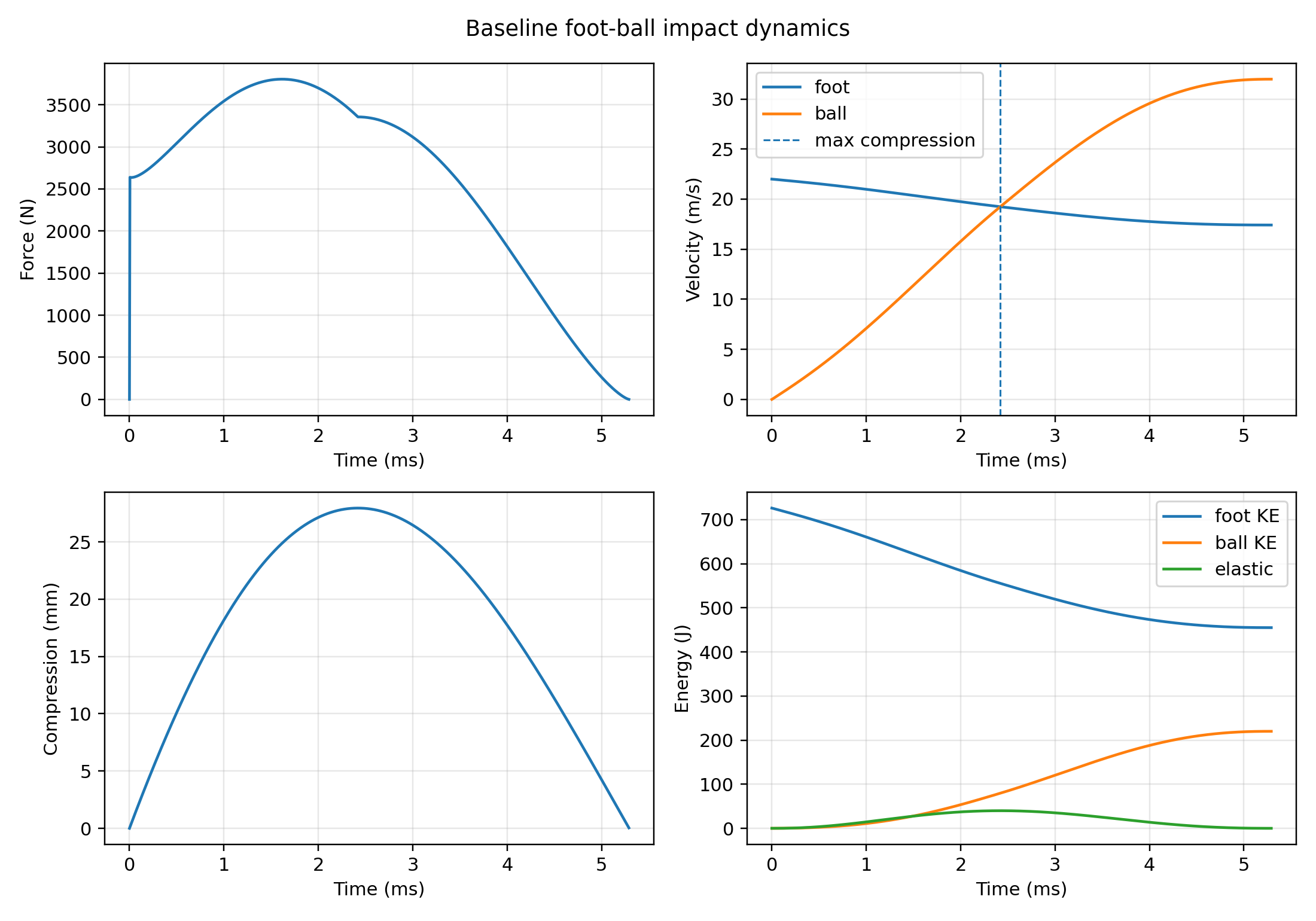
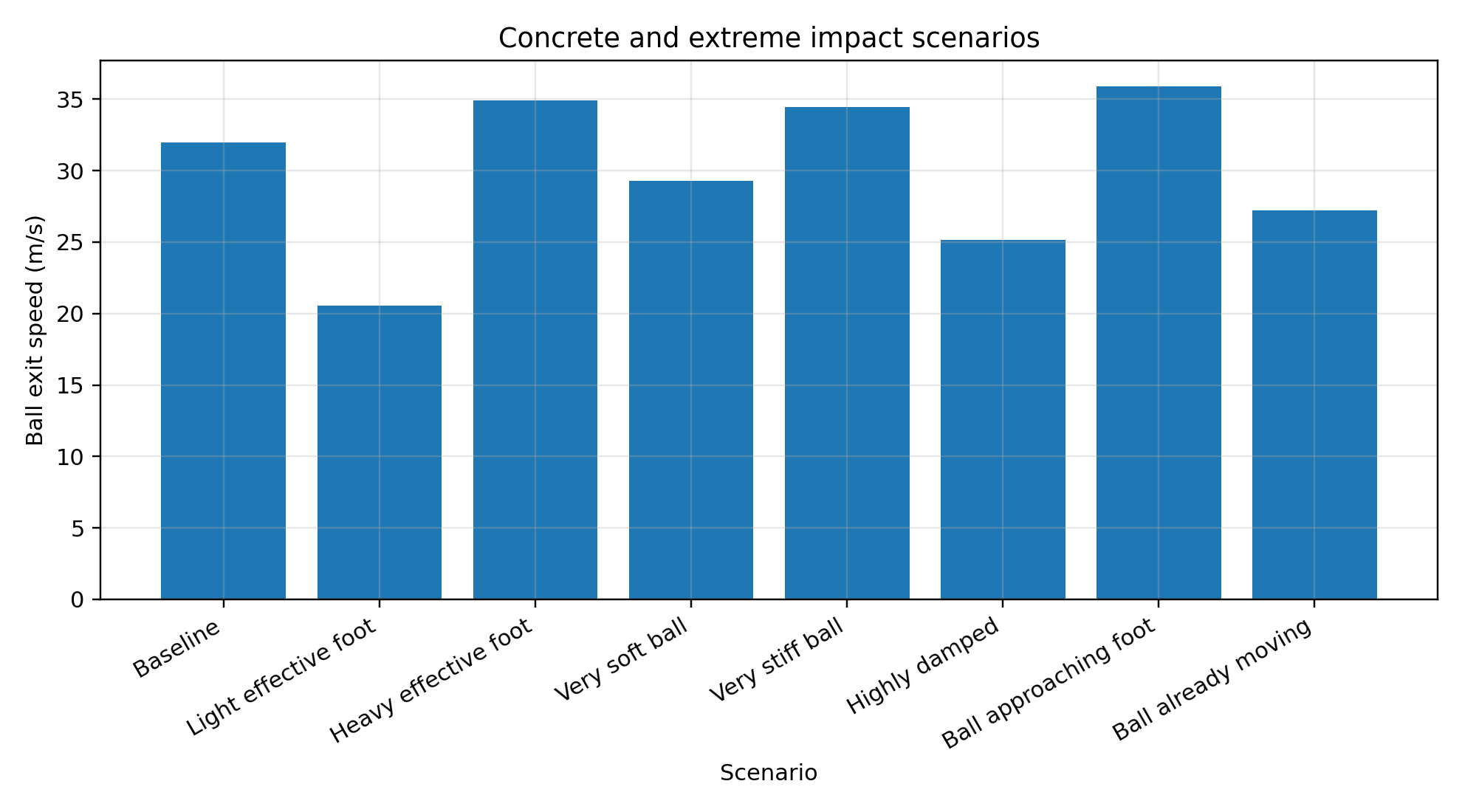
Use the simulator to adjust foot speed, mass, stiffness, damping, and initial ball velocity, then compare the predicted force curve, contact duration, impulse, and final ball speed with the explanation in the PDF.